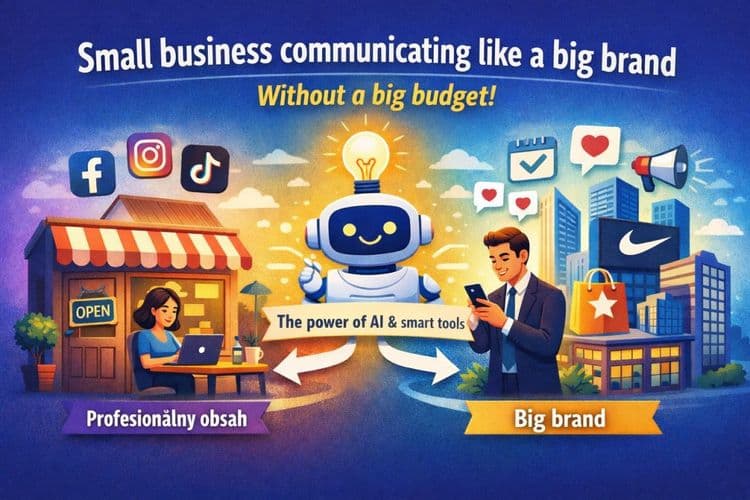
For a long time, it felt like “professional” marketing was reserved for companies with headcount: a content manager, a designer, a strategist, someone on approvals, someone on community. If you were a small business owner or a lean marketing team, you either shipped inconsistent content or burned nights trying to keep up. The real lesson, though, is this: big-brand polish isn’t a staffing advantage—it’s a workflow advantage. When your process is structured, your tone stays consistent, your output scales, and your team doesn’t collapse under the weight of “we need to post more.” Tools like abev.ai make that workflow accessible—so you can communicate with clarity and consistency without hiring a bigger team.
Big brands don’t always have better ideas. They usually have better systems. They run content like an operation: defined tone-of-voice rules, repeatable formats, structured approvals, and a calendar that makes execution predictable. That’s why their messaging feels polished and consistent—even when dozens of people touch it.
Think of brands like IKEA or McDonald’s. Their posts don’t just look good; they feel aligned. The tone doesn’t drift, and the message is recognizable across channels. That’s not because one genius writer is always on. It’s because the workflow reduces variability.
Small teams can achieve the same consistency when they stop relying on manual effort and start relying on structure: a brand guide, a content system, and tools that help produce and adapt content fast.
One of the biggest challenges for small teams is keeping a single brand voice when content is created quickly across platforms. LinkedIn often becomes “professional,” Instagram becomes “casual,” Facebook becomes “whatever we had time for.” Over time, that inconsistency weakens trust because audiences don’t know what to expect from you.
A workflow that enforces tone-of-voice rules changes that. When your content creation starts from a consistent baseline, every caption—whether it’s for LinkedIn, Instagram, or Facebook—sounds like the same brand. The benefits are practical:
your audience hears the same promise everywhere,
your posts feel more cohesive,
and you waste less time rewriting copy just to “make it sound like us.”
Consistency doesn’t just look better; it converts better because it builds familiarity.
The time sink in content isn’t posting—it’s producing enough high-quality variations. A single product announcement can easily become:
a short teaser,
a feature breakdown,
a customer benefit post,
a “how it works” explainer,
a proof post (testimonial, results, or demo),
and a CTA post to drive action.
Small teams usually don’t have time to write all of that manually. So they post once and move on—leaving potential reach and engagement on the table.
When you can turn one idea into multiple platform-ready captions and image prompts in minutes, you unlock scale without adding headcount. You’re no longer thinking “one post.” You’re building a content series. And series content is what creates compounding results over weeks, not days.
The difference between a stressful marketing team and a calm one is rarely talent. It’s planning. When you have one calendar for campaigns, you can see pacing, avoid clustering too many promos, and keep a steady cadence leading into launches.
Smart scheduling gives you a few immediate wins:
fewer late-night caption rewrites before publishing,
fewer “we forgot to post about this” moments,
better timing consistency across platforms,
and clearer coordination if multiple people are involved.
Even if you’re a team of one, a calendar workflow reduces mental load. You stop carrying the plan in your head.
Big-brand communication is the result of repeatable systems: a consistent brand voice, fast content variation, a clear calendar, and structured personalization. When those systems exist, small teams can move with the speed and quality of larger teams—without the burnout that usually comes from trying to do it all manually.
Personalization isn’t just adding a name to an email. On social, it means crafting angles that resonate with different audiences:
one post for beginners, one for advanced users,
one for decision-makers, one for practitioners,
one for agencies, one for in-house teams,
one for “pain” framing, one for “aspiration” framing.
Doing this manually is slow, so most small teams don’t do it consistently. But personalization is where performance improves—because relevance drives engagement. When you can generate variations quickly, you can match the message to the segment without doubling your workload.
This is especially valuable if you’re selling to multiple customer types or expanding into new markets. You can test what resonates without reinventing your entire content process.
Once you have consistency, speed, and personalization working together, your content starts compounding:
you publish more intentionally,
you reuse winning ideas,
your tone stays consistent across the team,
and you learn faster because you’re testing more variations.
Over time, this creates the same advantage large brands have: your content feels predictable in quality, even when your team is lean.