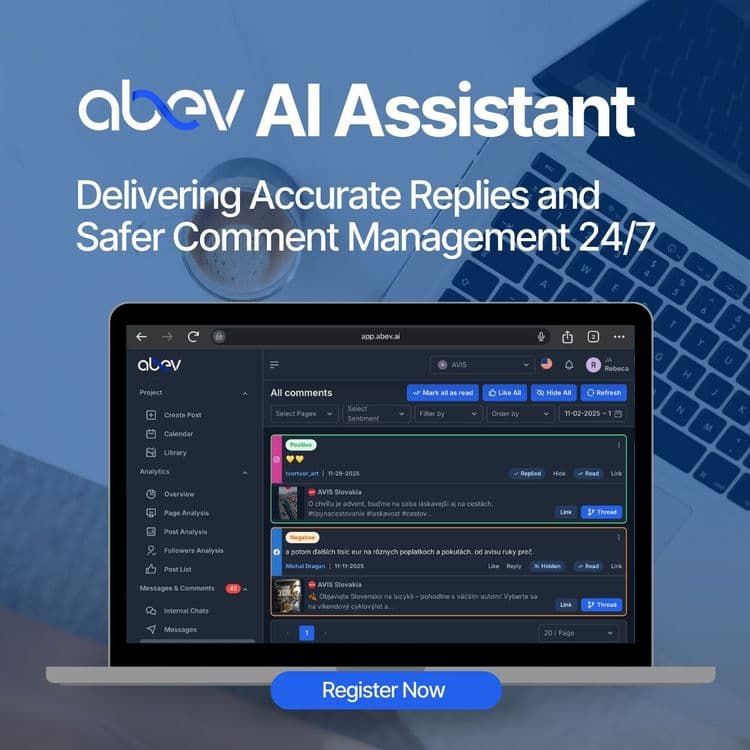
Social media doesn’t clock out at 5 PM. Comments, DMs, and repeat questions often spike exactly when teams are off duty—nights, weekends, and during campaigns. That creates a familiar pressure: either someone stays “always on,” or response times slip and customers get inconsistent answers. Over time, that gap doesn’t just hurt service levels—it drains the people responsible for the brand’s voice. An AI Assistant changes the equation by drafting on-brand replies around the clock, keeping tone and guidelines consistent while still leaving humans in control for edge cases. Done well, it’s not about replacing a team. It’s about making social support predictable, safe, and sustainable.
The social inbox has a sneaky way of expanding. A single post can trigger a wave of “How much is it?”, “Where can I buy?”, “Do you ship?”, “Is this available in Slovakia?”, and “Can you help me choose?”—plus DMs that need fast, polite clarity. When response times stretch, frustration rises and the next message becomes sharper, which then takes more emotional energy to handle. Teams start compensating by checking notifications constantly, even during off-hours, just to prevent escalation. That “always available” expectation can feel like part of modern brand presence, but it’s rarely sustainable. The brand voice also becomes inconsistent when different people jump in under time pressure, especially if they’re answering from memory instead of a shared playbook. This is where big-name brands often set the standard: the reason companies like McDonald’s or IKEA feel consistent isn’t because they never get messy inboxes—it’s because their customer communication is systemized. Smaller teams can achieve the same steadiness, but they need tooling that reduces chaos rather than amplifying it. A 24/7 AI Assistant, when properly configured, becomes that stabilizer.
Fast replies are good, but customers remember how they were answered. A quick response that’s vague, incomplete, or slightly off-tone can create more back-and-forth than a slower, clearer reply. Consistency is especially important for repeat questions, where the expectation is simple: “Give me the same accurate answer every time.” Without structure, the inbox turns into a lottery—one person answers with detail, another answers in half a sentence, and a third misses an important policy detail. An AI Assistant helps by drafting replies that follow the same guidelines, every time, even when the volume spikes. It can reflect your preferred tone—formal, friendly, concise, witty, premium—without drifting into random phrasing. It also reduces the “half answers” problem, because templates and policy rules can be applied automatically to common scenarios. Over time, that consistency becomes part of the customer experience, not just an internal efficiency win. People stop asking follow-up questions because the first answer is complete. And that reduces the total inbox load—a compounding benefit most teams don’t anticipate.
An AI Assistant should never be an unfiltered autopilot. The safest setups combine autonomy with guardrails: clear policies, restricted topics, escalation rules, and human review when something is unclear. That balance is what protects reputation—especially in sensitive conversations—while still delivering speed and consistency for everyday questions.
The practical value of an assistant depends on how well it reflects your brand’s rules. That starts with simple inputs: your tone-of-voice guidelines, do’s and don’ts, and approved answers for the most common question categories. Then comes the important layer—what counts as sensitive. Sensitive topics vary by brand, but they often include pricing exceptions, refunds, warranty disputes, regulated claims, medical or legal questions, harassment, and anything that could become a screenshot. The assistant should be trained to recognize these and either respond carefully with a safe, neutral acknowledgement—or flag for human review. A good rule is: if the message requires judgement, negotiation, or a nuanced decision, it shouldn’t be fully automated. The assistant can still draft a response, but it should pause before sending, leaving a human to approve. This is where teams often feel immediate relief, because the assistant handles the repetitive volume while humans focus on the conversations that truly matter. The outcome isn’t just fewer mistakes; it’s more confidence that the brand voice won’t slip under pressure. And confidence changes behavior—teams stop firefighting and start operating with intention.
When the inbox becomes manageable, the entire rhythm of the team shifts. Instead of reacting to every notification, people can batch-review flagged messages and approve drafts quickly. Repetitive questions get answered instantly, which reduces conversation length and lowers future volume. The team spends less time on “support mode” and more time on higher-value work: campaign planning, creative testing, community building, and proactive engagement. Even stakeholder communication improves, because reporting becomes clearer—what was handled automatically, what needed human input, and what topics are trending in the inbox. Another underestimated benefit is morale: fewer late-night interruptions, fewer stressful escalations, and less guilt about being offline. That makes the work sustainable, which is especially important in social media where burnout turnover is common. Customers notice the difference too, even if they don’t know an assistant is involved: replies come faster, information is consistent, and the experience feels smoother outside business hours. In competitive categories, that “always responsive” impression can become a real differentiator.
The best rollouts start small and expand based on data. Begin with the top 10–20 repeat questions and build strong, approved reply patterns for those. Set conservative guardrails early: escalate anything unclear, anything emotional, and anything sensitive. Define a tone that matches your brand and keep it specific—examples help more than adjectives. Then monitor outcomes: response time, number of follow-up messages, customer satisfaction signals, and the percentage of conversations that needed human intervention. It’s also smart to schedule periodic reviews of the assistant’s performance, because campaigns, offers, and product details change. If your pricing or policies update, the assistant needs the update too—otherwise “consistent” becomes “consistently wrong,” which is worse than slow. Finally, treat the assistant like a teammate: give it rules, feedback, and boundaries, and it will perform predictably. Teams that skip that step usually end up disappointed—not because AI can’t help, but because the system wasn’t designed for real-world messiness.